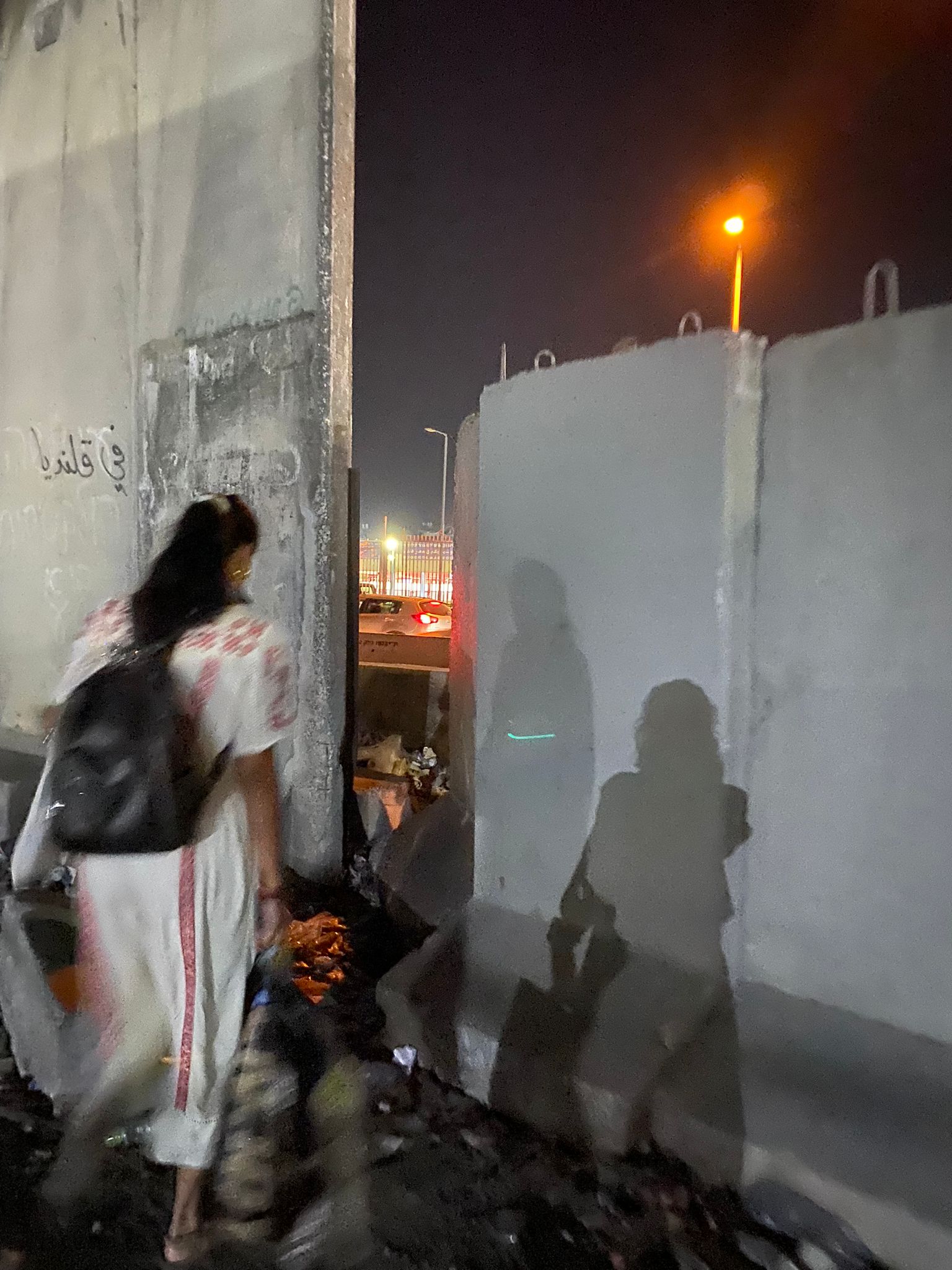
The driver of the yellow mini van(service as we call it, which refers to yellow mini vans that are used as means of public transpotation in the west bank. There’s no schedule: once the service is full, it takes off) pointed towards a hole in the apartheid wall and told us that we should take this shortcut to make it to the checkpoint faster. He grinned gingerly and departed away from Qalandia’s usual traffic jams. We slipped through the shaft separating two slabs of concrete, as we’ve been indicated (check photo below), then walked straight to the checkpoint. Lit by flourescent lights, the endless metal corridors were grim and morbid. I felt anger, not only because of such humiliation, but also because the audacity of this state to hang a sign at the entrance of this illegal, inhumane military checkpoint saying: “this checkpoint was made for you, keep it clean” something along these lines.
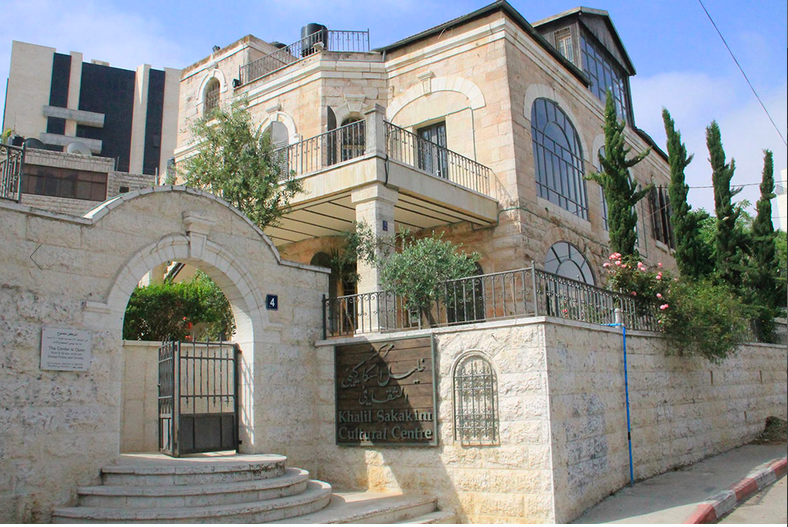
Just couple of hours ago and not that far from this checkpoint, I was sitting with amazing young writers at Khalil-Al-Sakakini cultural center reading Neruda’s Ode to his Socks. It was part of a Creative Writing Workshop that I held, as part of the project Poetry is Closer than the Sea, where participants arrive with their own text written in English and we read it together and give feedback. The juxtaposition of where i was and where I am made me question the authenticity and the ability of poetry to make a change. Just now, and for three hours, we were sitting in the lovely stone balcony of this beautiful cultural center, where Mahmoud Darwish used to smoke his cigarettes and a place called after one of the brightest, most visionary Palestinian thinker Khalil Al Sakakini. We sat there, safe and joyful and read poems and short stories. And now here I am, crossing a checkpoint and feeling the anger boil inside my guts. Can poetry make a difference in the context of brutal colonial violence, manifested, among many things, in this ugly structure of apartheid wall and checkpoint?
To answer this question honestly, I want to tell you what we’ve done in this workshop and then reflect on it. We started by a short round of introduction, telling our name, talking a bit about our relationship with writin, and at the end sharing a book or two that we are reading at the moment. After that, we had one writing exercise as a warm up then we plunged into reading texts submitted by the participants then giving our opinion about it as well as recommendations to try. We had a short break, where we got the staff to open the office of Mahmoud Darwish. This, for me, was a special moment. To roam through Darwish’s writing office and to check his photos and books, was to feel his presence. And quoting Darwish himself the trace of the butterfly cannot be seen fades/the effect of the butterfly never fades.
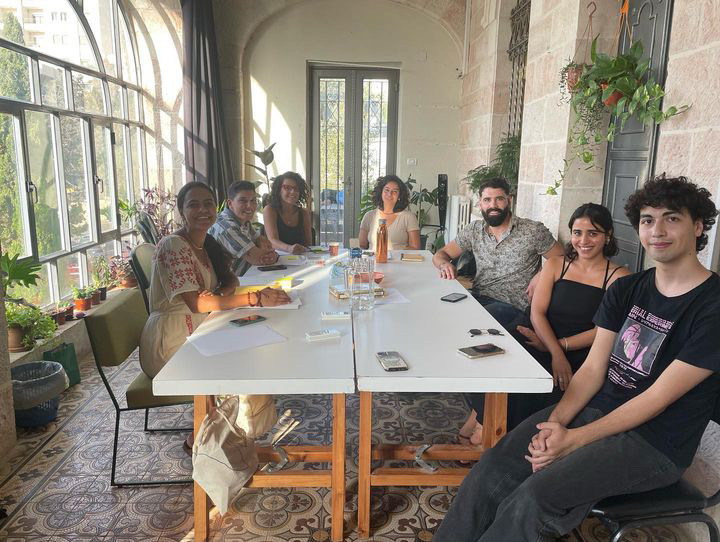
After the break, we reconvened again around the white table, and indulged on sweet figs picked from the front yard of the center and brought us by the director of the center. We continued editing, did more writing exercises and ended the workshop by taking the following photo.
For me, this workshop gave me hope. And hope is an invaluable commodity, especially when you are part of a colonized people. Hope is the fuel to keep us going forward and not succumb to the relentless blows of occupation.
This workshop made me feel rewarded. One participant was in a mental block for the past few months, and as he told me at the end of this workshop: when is the next one? I feel so motivated to write and I feel that I know what I want to write now… Another participant sent me this following message:

In addition, I felt that the space that we’ve created in that balcony on the 3rd of September provided us with the clearance to articulate our experiences in this very harsh reality that our blad lives at the moment. Colonialism was absent in its physical manifestations, but was present in its mental and emotional effect. This space provided us with the ability to take a step back and write down our feelings: our frustration, our anger, our fear, our hope, our joy. A very close friend of mine told me:

I still think about the practicality of poetry, and its place as well as effect in society. I can say that the brief 3 hour workshop gave me a glimpse of what our society can be like: a nourishing, open, diverse and supportive community.
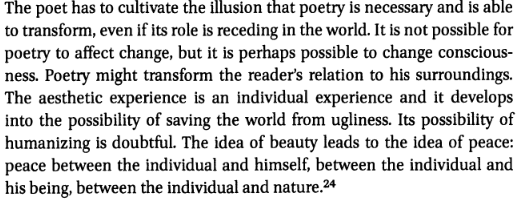
I edited this post to add that last night I sought Darwish for answers about these difficult questions, and I would like to share what I’ve found with you:

 AICHA BINT YUSIF