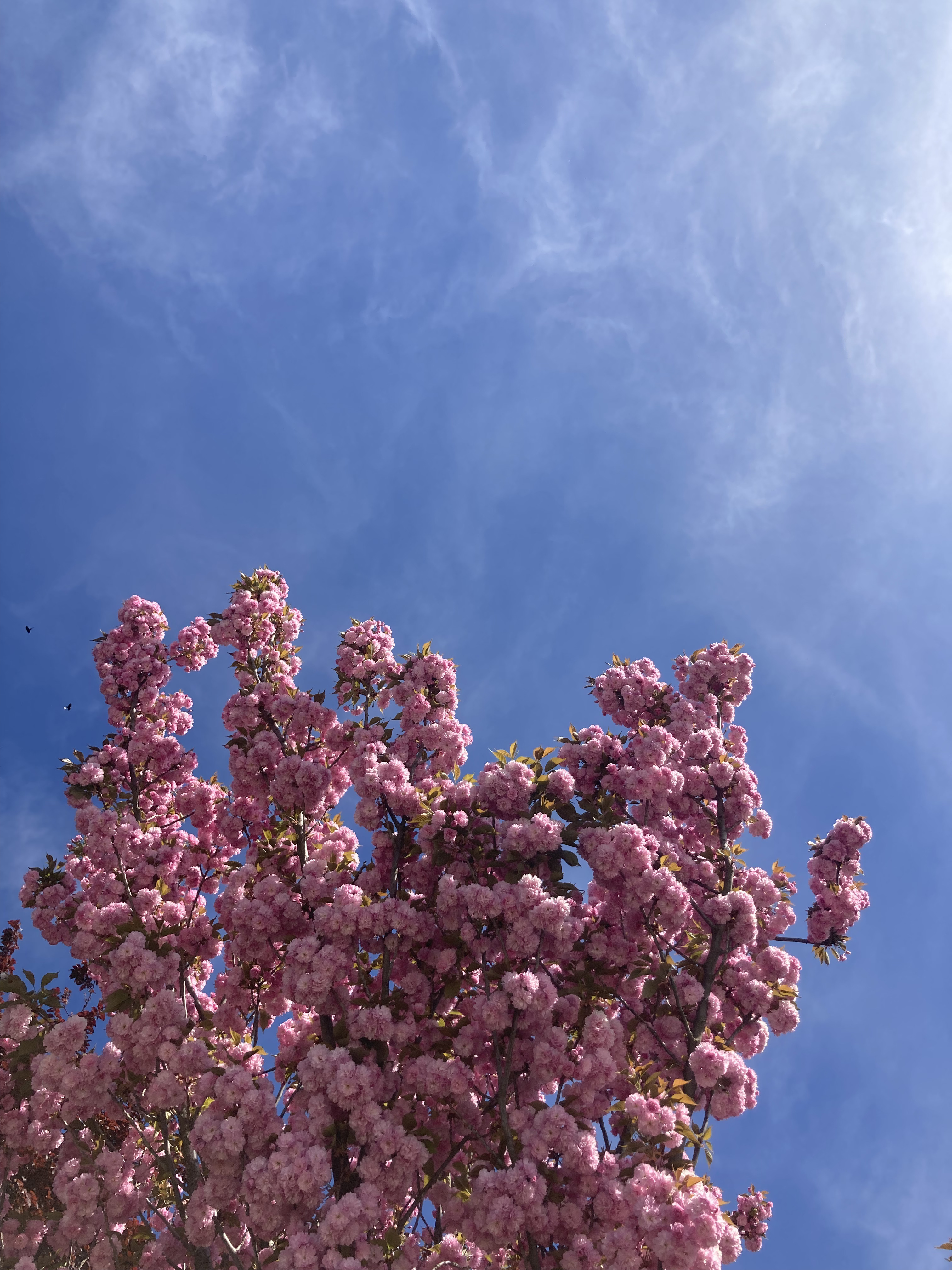
It is said that this tree is related to the Samurai and represents ephemerality, as it blossoms for less than three weeks. In fact, the blossoms are on the ground, forming a pink carpet and the trees are green.
May is [unfortunately] an eventful month for us Palestinians: Nakba commemoration, commemoration of many Zionist raids and villages being wiped out, and last year the killing of our star Shireen Abu Akleh. So maybe Eliot was wrong, April is not the cruelest month, it’s may- May is the cruelest month. I started writing a poem about May, and i attached an excerpt from it at the end of this post.
Interesting stuff:
- Trying to understand what is happening in Sudan.
- Arabic speakers’ minds are wired differently, according to this study.
- Another great Sarde, this time about the myths and history of Arabic.
- Youth and Age poem by Khalil Gibran (it was written in the Syrian World Magazine 1926!) – scroll to page 7 🙂
- more Brazilian poetry please. A poem by João Cabral de Melo Neto.
- prose poem or essayiste, or a small glimpse into beauty? this time by Ross Gay
- If you thought that Mahmoud Darwish can’t get any sexier reciting poems, here is a forgotten poem he recited in the 1970s. At the end of this post, I am sharing a humble Spanish translation.
I was having coffee with friends when a random guy joined our table (he looked really high) and sat next to me. At some point in the conversation, he told me: appreciate the moment because cada vez la luz es más grande. I know it sounds weird but it is also poetic. So here’s a writing prompt:Each time, the light is bigger. Or each time, the light gets larger.
The Palestinian Wasteland
by Aicha Yassin
May is the cruelest month.
Hibiscus and pomegranate blossoms
startled by sirens in mid-bloom. There’s no stop
sign by the poplars stitching the highway,
we’re rather forced to stop – paralyzed –
To commemorate those who expelled my ancestors,
To dance on the rhythm of my ca ta stro phe.
Jasmine and cacti stoop
Diffidently, the sun burns them
unapologetically.
Nakaba yantakibu nukiba => Nakba.“
| Una pequeña tarde sobre un pueblo abandonado Y dos ojos soñando Regreso treinta años Y cinco guerras Para ser un testigo del tiempo Que me ofrece un grano de esperanza. El cantante canta Sobre el fuego y los extranjeros. Y la tarde era más tarde Y el cantante cantaba. Le interrogan ellos: Para que cantas? Él contesta Porque canto. Buscan sus entrañas Solo encuentran a su corazón Buscan su corazón Solo encuentran a su pueblo. Y buscan su voz Solo encuentran a su tristeza Buscan su tristeza Solo encuentran a su celda Y buscan su celda Solo encuentran a ellos mismos encadenados Detras de las montañas Duerme el cantante solo Y en el mes de marzo Nacen de él las sombras. | مساءٌ صغيرٌ على قريةٍ مُهملهْ وعينان نائمتانْ أعودُ ثلاثين عاماً وخمسَ حروب وأشهدُ أنّ الزمانْ يخبّئ لي سنبلهْ يغنّي المغنّي عن النار والغرباء وكان المساءُ مساء وكان المغنّي يُغَنّي ويستجوبونه: لماذا تغنّي؟ يردُّ عليهم: لأنّي أغَنّي وقد فتّشوا صدرَهُ فلم يجدوا غير قلبهْ وقد فتّشوا قلبَهْ فلم يجدوا غير شعبهْ وقد فتشوا صوتَهُ فلم يجدوا غير حزنهْ وقد فتّشوا حزنَهُ فلم يجدوا غير سجنهْ وقد فتَّشوا سجنَهُ فلم يجدوا غيرهم في القيود وراء التّلال ينامُ المغنّي وحيداً وفي شهر آذار تصعدُ منه الظل |

 AICHA BINT YUSIF
