Last week, Terez Sulieman’s official Facebook page posted a short, low-quality video with a high-quality content. The video features the Palestinian artist Terez Sulieman and the artist Sofia Adriana Portugal, performing an Arabic-Spanish fusion folk song on a boat cruising the Nile river in Egypt. The two singers compete with each other: each singing a song from their folklore while sharing the same rhythm of clapping and table pounding. This organic, spontaneous piece of art is part of an amazing music collaboration between artists across the mediterranean region called Mina (founded and directed by Terez Sulieman).
https://www.youtube.com/watch?v=guGzQlAUNyk&t=60s
The video became viral and was widely circulated in different platforms; both Arabic and Spanish. In less than a week, it had more than 10K views. The rhythm is so easy to catch and fast to capture people’s attention. It transmits a lively, dynamic energy proving that beauty transcends the limits of language. Nonetheless, a closer look into these ballads and their place in history and culture, especially when they’re juxtaposed, adds to the magic of this raw performance.
The Spanish song is called “Las Panaderas”, which means the women bakers. It’s a folk ballad originating from the region of Castilla y Leon, Central Western Spain. This style of ballads is common to the Iberian peninsula, and exists in many variations according to the different region, accent and language (for example, in Galicia they sing it in gallego and not in Spanish). Maybe most of us know the Spanish musical tradition of “Palmas” or the claps, which is popular in the flamenco tradition, but another famous music tradition is table pounding. The group Mayalde, originally from Salamanca, preserves this heritage.
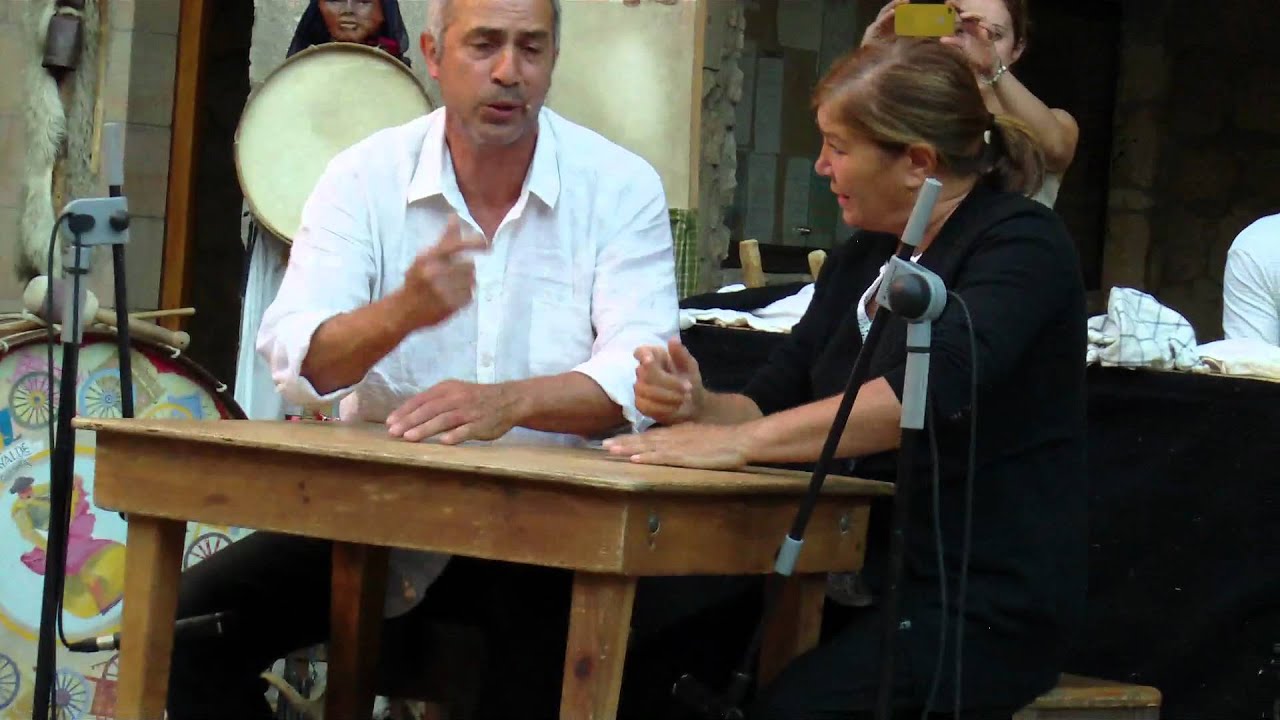 (Mayalde performance of “Las Panaderas”)
source: https://www.youtube.com/watch?v=OhPBbcXVyww
“Las Panaderas” is usually sung during kneading bread or baking bread. It is also sung during the execution of a physical work like harvesting the crops or grinding the wheat…Here is the lyrics for the song and my humble translation of it:
Las panaderas
A la entrada de Oviedo y a la salida
hay una panadera, cuánto me mira.
Ay, qué panadera.
Ay qué panaderilla, el alma me lleva.
Esa panaderilla tiene tres nombres:
Jugadora, Borracha y Amiga de hombres.
Ay, qué panadera.
Ay qué panaderilla, el alma me lleva.
Dime, panaderilla, cómo va el trato.
La harina va subiendo y el pan barato.
Ay, qué panadera.
Ay qué panaderilla, el alma me lleva.
Esa panaderilla me ofrece un bollo,
por no verle la cara se lo perdono.
Ay, qué panadera.
Ay qué panaderilla, el alma me lleva.
The woman bakers
At the entrance of Oviedo, and at its exit
There is a woman baker, the way she looks at me
Oh, what a panadera (woman baker)!
Oh what a panaderilla, my soul dies/longs for her.
This panadera has three names:
Player, drunkard, and a friend of men.
Oh, what a panadera!
Oh what a panaderilla, my soul dies for her.
Tell me, baker, how is the deal
The price of flour is rising, and the bread is cheap
Oh, what a panadera!
Oh what a panaderilla, my soul dies for her.
That baker offered me a pastry
For not seeing her face, I do forgive her
Oh, what a panadera!
Oh what a panaderilla, my soul dies for her!

The Palestinian song is called “Ya Tale’in l-Jabal – يا طالعين الجبل” which translates to “you going up the mountain”. A popular folk song, that was sung by women when they visited Palestinian prisoners held in jail during the Ottoman rule in historic Palestine. They added a twist of tongue to some syllables by repeating the sound of “l” in order to deliver a hidden message to the captivated that the rebels are coming to free them that night. Moreover, the meaning of the lyrics manifests the revolutionary nature of the song.
|
(يا طالعين عين للل الجبل يا موللل الموقدين النار بين لللل يامان يامان عين للل هنا يا روح ما بدي منكي لللكم خلعة ولا لالالا لابدي ملبوس بين للل يامان يامان عين للل الهنا يا روح ما بدي منكي لللكم خلعة ولا لالالالا بدي زنار بين للل يامان يامان عين للل الهنا يا روح إلا غزال للللللذي جوين للللكم محبوس بين للل يامان يامان عين للل الهنا يا روح إلا غزال لللللللذي جوّين اللللللكم ما يدوم بين للل يامان يامان عين للل الهنا يا روح ..!!) |
English translation:
To those of you who are going up the mountain
those who are setting a fire
Aman aman*
I just wish you joy, my soul
I don’t want any dressed from you
Nor belts
Aman aman
I just wish you joy, my soul
To those gazelles that are jailed inside (referring to the imprisoned rebels)
Aman aman
I just want you joy, my soul
I don’t want any dressed from you
Nor belts
Aman aman
I just want you joy, my soul
*Aman: I couldn’t translate this word/expression because it’s a tricky one. It’s used in songs and folk poems to express awe/woe or to call attention to a matter. For example in Sheikh Imam’s songs he says Aman Aman, as a way to express tarab (ecstasy). The literal meaning امان in Arabic is safety/mercy, and it’s thought to be used to plead for mercy or safety, especially in the times of war. It’s also used in Turkish. Nowadays, I hear a variation of the word Aman, by saying amanti/amani, meaning I put my safety in your hands. Or if you want to ask for help: amani 3lek (my safety on you, literally)
As we said before, the clapping in the Spanish song reminds us of the famous Andalusian Flamenco clapping and dancing. It is not uncommon among scholars to claim that the rhythm in Flamenco has a deep-rooted Arabic influence from the time of Andalusia. After all, Muslims, Jews, Christians and gypsies (gitanos) shared the same space for more than 600 years. We often tend to forget that. This collaborative work manifests the living continuity of culture and art stretching from the shores of Haifa, Palestine all the way to the hills of Castilla y León. In addition, the fact that both songs are traditionally sung by women empowers the representation of women as breadwinners, workers and also revolutionaries!

 AICHA BINT YUSIF